
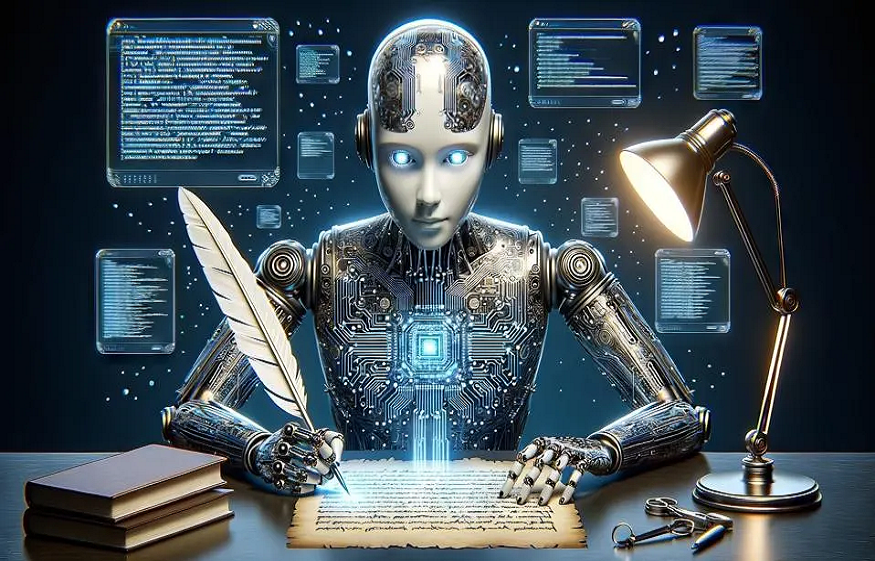
Generative AI has quickly moved from a niche research concept to a powerful force reshaping how businesses operate, how content is created, and how technology interacts with people. From writing text and generating images to building code and automating complex workflows, Generative AI is redefining productivity and innovation across industries. As adoption accelerates, understanding how it works and why it matters has become essential for organizations and professionals alike.
What Is Generative AI
Generative AI refers to a class of artificial intelligence models designed to create new content rather than simply analyze or classify existing data. These systems are trained on massive datasets and learn patterns that allow them to generate original outputs such as text, images, audio, video, and even software code.
Unlike traditional AI systems that follow predefined rules, Generative AI models can produce responses that feel natural, contextual, and creative. This ability makes them highly valuable for tasks that once required human imagination and expertise.
How Generative AI Works
At its core, Generative AI relies on deep learning models such as large language models and diffusion models. These systems are trained using neural networks that analyze billions of data points to understand structure, relationships, and probability.
When given a prompt, the model predicts the most likely output based on its training. Over time, improvements in model architecture, computing power, and data quality have made Generative AI outputs increasingly accurate and human-like.
Key Applications of Generative AI
Generative AI is not limited to a single use case. Its flexibility allows it to support multiple industries and workflows.
In content creation, it helps generate blog posts, marketing copy, product descriptions, and social media content at scale. Designers use it to create visuals, logos, and mockups in minutes rather than days.
In software development, Generative AI assists with writing code, debugging, documentation, and even test case creation. This significantly reduces development time and improves efficiency.
In business operations, companies use Generative AI for customer support chatbots, automated email responses, report generation, and data summarization. These applications improve response times and reduce operational costs.
In education and training, Generative AI supports personalized learning, content generation for courses, and real-time tutoring assistance.
Benefits of Generative AI for Businesses
One of the biggest advantages of Generative AI is productivity. Tasks that previously took hours can now be completed in minutes, allowing teams to focus on strategy and decision-making.
Cost efficiency is another major benefit. Automating repetitive or content-heavy tasks reduces the need for large manual teams without sacrificing quality.
Generative AI also enables scalability. Businesses can produce consistent output across multiple channels and markets without increasing workload.
Additionally, it supports innovation by allowing teams to experiment faster, test ideas quickly, and iterate without high upfront investment.
Challenges and Limitations of Generative AI
Despite its capabilities, Generative AI is not without challenges. Accuracy remains a concern, especially when models generate outdated or incorrect information. Human oversight is still necessary to ensure reliability.
Data privacy and security are also critical considerations. Since these systems learn from vast datasets, organizations must ensure compliance with data protection regulations.
Bias is another challenge. If training data contains bias, the generated output may reflect or amplify it. Responsible usage and ongoing model evaluation are essential to address this issue.
Finally, over-reliance on Generative AI can reduce originality if not used thoughtfully. The best results come from combining human creativity with AI assistance rather than replacing it entirely.
Generative AI and the Future of Work
Generative AI is reshaping job roles rather than eliminating them outright. Professionals who learn to work alongside AI tools gain a competitive advantage. Skills such as prompt engineering, AI oversight, and strategic thinking are becoming increasingly valuable.
Instead of replacing human talent, Generative AI augments capabilities, allowing individuals to do more with less effort. This shift emphasizes creativity, critical thinking, and leadership over repetitive execution.
Organizations that invest early in AI literacy and ethical implementation will be better positioned to adapt to future changes.
Best Practices for Using Generative AI Effectively
To maximize value, businesses should define clear use cases before implementation. Not every process needs automation, and strategic alignment is key.
Human review should remain part of the workflow to maintain accuracy, brand voice, and compliance standards.
Training teams on how to use Generative AI tools responsibly ensures better results and reduces misuse.
Finally, continuous evaluation helps refine outputs, improve prompts, and adapt as models evolve.
Final Thoughts
Generative AI is no longer a futuristic concept. It is an active, evolving technology that is reshaping industries, workflows, and creative processes. Businesses and professionals who understand its strengths and limitations can leverage it as a powerful tool rather than viewing it as a threat.
As Generative AI continues to advance, its impact will only grow. Staying informed, adaptable, and ethical in its use will be the key to long-term success in an AI-driven digital landscape.











+ There are no comments
Add yours